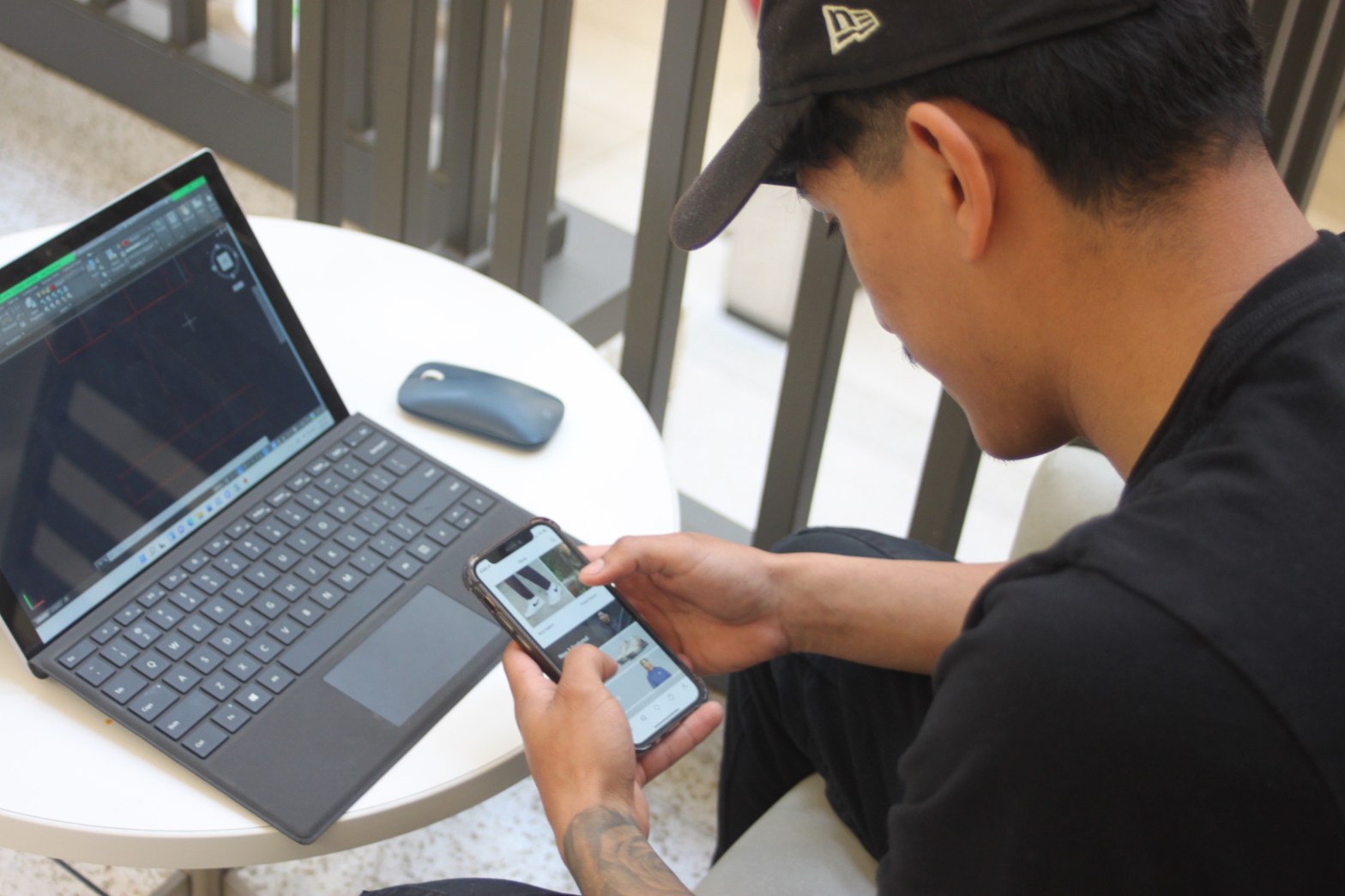
Now that COVID has been around for about two years in the US, several students feel that they still shop online at around the same rates as before the pandemic.
“Shopping online is not something I like to do but I just do it every now and then,” Lumberton sophomore Joel Jimenez said. “I’m always looking at stuff online but online shopping is not something I constantly do since I’m already not much of a shopper either.”
Before COVID hit the US, the civil engineering major said he did a bit less shopping then. However, since COVID has waned, he has started to do it a bit more often. He prefers to order items related to shoes, sports, and shirts.
“I think it’s more risky online,” he said. “It could go 50/50 online– I’d rather be in person and shopping at a store than online. I always want to try on clothing first before buying and when I buy something, I want to get it then and there at the store rather than wait. I don’t want to deal with sending something back and getting my money back. (Purchases online) might not look like it’s picture, it might not fit, there are sketchy websites, and returning something in the mail can just be a hassle.”
Orange freshman Cameron Guyote said he used to shop much more online than he does now and currently feels he is more of an online window shopper than buyer.
The cybersecurity major said he didn’t start shopping more online because of COVID. He tends to purchase electronics online.
“I still look at stuff online and check out the prices on different things that I might be looking for,” he said. “When I was building my computer, it was like on a daily basis. I was checking sites, checking prices, seeing if any of them would drop, and seeing if there’s any discounts that came out or anything like that.”
Guyote said he doesn’t have a preference for shopping online or in person. Instead, he feels it is more of a case by case basis, preferring to go to the place that has what he is looking for.
“If you need something online, you just have to buy it,” Guyote said. “There is a wider variety of things, it’s more accessible, and there are more options to pick from.”
His most memorable shopping experience online was when he finally bought the last piece he needed to start building his computer — a graphics card that cost about $500. The combined total of all the computer parts cost him about $2000 he said.
“It was just a really big deal because that computer means a whole lot to me and having it finally finished and ready to go,” he said. “That was a really big moment for me.”
Nederland junior Micheala Howard said she is not much of an online shopper.
“I’ll do it if I have to and I feel like it’s a little bit exhausting,” Howard said. “I’ll shop online like two or three times a month.”
Since COVID, she has started to shop online a bit more, especially for items such as clothes, textbooks, shoes, and skin care.
“Sometimes I go on apps but I don’t usually buy anything,” the English major said. “I just like to browse, kind of like browsing a digital magazine.”
When it comes to shopping for items like clothes or food, Howards said she tends to prefer going to an in-person department store and use online shopping mostly for items she needs that her local stores don’t have.
“I don’t really believe in buying groceries online because you never know when the due dates are,” she said. “When I go to the store in person, I can physically check.”
Lumberton freshman Alex Paulino said he is all for online shopping.
The mechanical engineering major sometimes uses various platforms to shop or browse, such as the Facebook Marketplace or buying directly from people from ads on apps like Instagram.
In one of Paulino’s experiences, when he had bought a truck from the Facebook Marketplace, he arranged the meeting to be in person and paid in cash, he said.
The Facebook Marketplace is similar to Ebay. Users can start conversations with each other in order to arrange payment or a meeting.
He said did not shop as much before the pandemic, mainly because he was younger and didn’t have as much money. Now, he tends to shop online about once a month.
He tends to buy clothes, hats, or accessories.
Overall, the students said that they all tend to window shop online rather than just making a purchase and that the pandemic did not really affect how much they shopped online.
“Shopping online is easier, it saves gas money, there’s a broader range of things you can buy, and I like to just look at my options,” Paulino said. “The anticipation of it coming in the mail – Like waiting for something bought online to come in is probably the best thing compared to going in and buying it at the store.”
 Ambour Leal